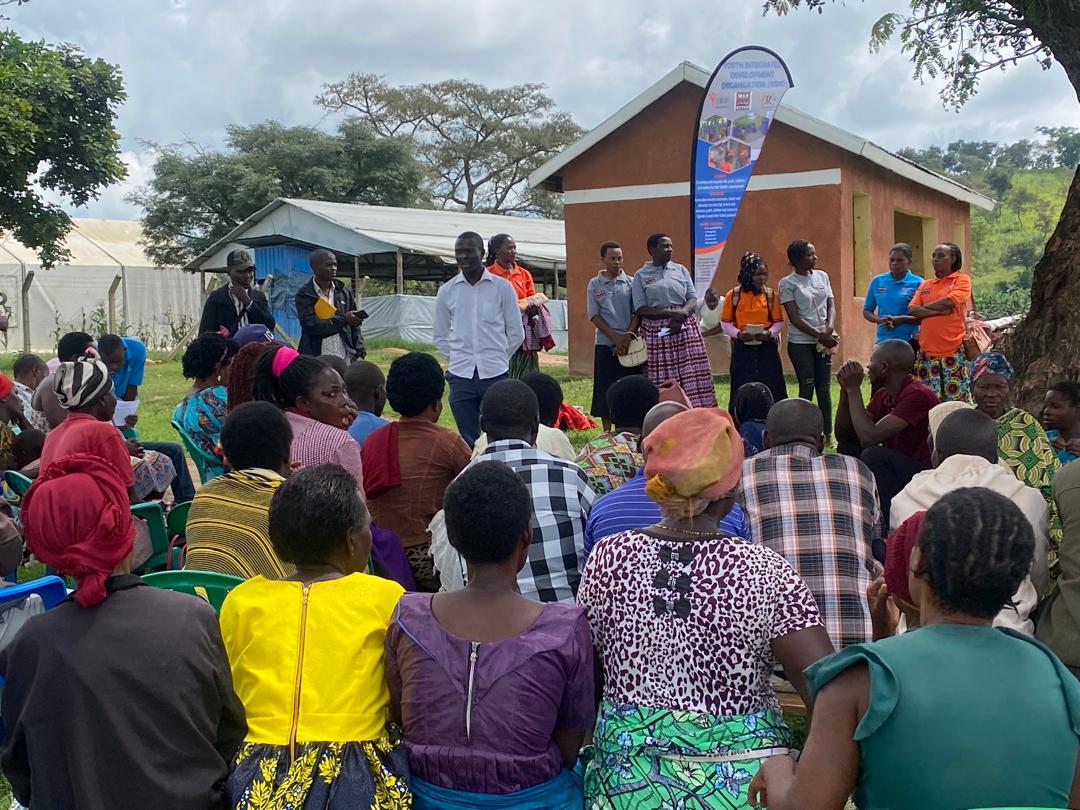
Currently YIDO is in partnership with War Child Canada funded by MasterCard foundation, YIDO is implementing a 5-year Project which started in 2022-2027 called BRIDGE Project that is; from Secondary Education and Skill Development to Job Opportunities to the Refugees and Host community youth in Uganda.
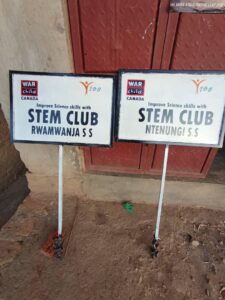 This project is implemented in Kamwenge District specifically in the following schools; Rwamwanja SSS, Ntenungi SSS and Bwiizi SSS. YIDO’s main role on BRIDGE Project is to create more awareness and sensitization about the project to the youth with in the settlement and host community in Kamwenge District.
In terms of milestones for the BRIDGE Project, YIDO prides over the success attained with a particular focus on the following Six Core Activities; 1). Establishment and orientation of Community Education Committee(CECs) and Youth Education Committee (YECs), Conduct Community –level enrollment and advocacy campaign with more focus on girls including community dialogues with local leaders, Facilitate Mother to Mother support group sessions conducted to advocate for girl child education, Facilitate bi- annual coordination meeting (these are between Community Education Committee(CECs), AEDP school Management Committee, District Education Offices – DEOs, OPM, UNHCR and other Education partners), Train School- based STEM and entrepreneurship clubs to further strengthen work readiness, transferable and entrepreneurship skills beyond the classrooms (including BTVET), and lastly, Organize and facilitate national and localized education policy –related initiative including in the promotion of gender transformative and inclusive educational structural changes.
ROLES OF COMMUNITY STRUCTURES
1. Community Education Committee (CEC)
Community Education Committee refers to a group of volunteers identified by the community of host and refugee community to oversee the smooth running of the AEP center together with the host school management committees/BOG/PTA. The committee identifies and addresses the educational needs and rights of all learners in a community.
Alternative names may include ‘parent-teacher association’ or ‘school management committee’. It can assist a community through training and capacity building activities or by engaging with education authorities and other education stakeholders to support education programmes. If a community education committee does not already exist, its formation should be encouraged
Composition
The community education committee should be representative of all the groups in the community and may include:
school administrators, teachers and staff;
- parents or care-givers
- children and youth
- staff from civil society organizations;
- representatives from local NGOs and religious organizations
- traditional leaders
- Health workers.
- Representative from BOG/PTA
- Opinion leaders
- Members from different nationalities
- Representative for political leaders/RWC
The inclusion of representatives of vulnerable groups is essential (Representation of both genders, Nationalities – Nationals and People we serve, PWDs E.T.C. Community education committee members should be selected through a locally relevant participatory process that is appropriate to the context and that allows women and men and girls and boys to participate equitably. In complex emergencies, where social distinctions such as ethnicity, tribe, religion and race can be exploited, the community education committee should work with all parties. While inclusion is the goal, the safety of individuals and groups comes first. Committees should aim to provide education safely, impartially and appropriately for everyone in the community. They should have first-hand knowledge of the changing socio-economic and political context and communicate with decision-makers at all levels
Positions of CEC
- Compose of 9 members with equal gender representation.
- Chairperson
- Vice chair person
- Secretary (Center manager)
- Committee members (6-8, 1 from each block)
Qualities of a CEC Member
- Committed person towards volunteer
- Person with good truck records
- A role model
- A parent whose child is enrolled in that school or AEP class
- God fearing person
- Person of character/Integrity
- A member of host community/Refugee
Roles and responsibilities
Roles and responsibilities of community education committee members should be clearly defined and may include:
- meeting regularly to address issues of concern
- keeping records of meetings and decisions
- mobilizing community financial and in-kind contributions
- determining appropriate approaches sensitive to age and culture to ensure that educational programmes respect the needs and rights of learners. Examples include flexible school calendars and age-appropriate curricula that reflect the community context
- communicating with the community and local and national education authorities to promote good relationships between community members and decision-makers outside the community
- ensuring that those responsible for ensuring access and quality of education are accountable monitoring education provision to help ensure quality of teaching and learning
- Mother-to-mother peer support groups
- Will provide mothers of girls both in and out-of-school an opportunity to come together to discuss parenting practice.
- Discuss shared concerns for their girl children attending school, hopes for their children’s futures and reducing barriers within their communities.
- Over time, the groups can evolve to provide mentorship for younger mothers, income generating opportunities linked to the school and through this, present a positive role model for children.
- The assumption is that this approach will reinforce the peer influence for positive deviance behaviors among mothers sending their daughters to school.
- Enrollment will be encouraged through campaigns, radio programming and community events led by local women’s and youth groups.
- Finding ways to meaningfully include boys and men in the conversations and activities and involve strategically selected men and boys as champions for girls’ education. The inclusion of men and boys in conversations must be maintained alongside the promotion of women’s leadership, in order to maintain a “do no harm” approach (Flemming et al, 2013). Cognizant of the decision-making role of men in many families, the intended benefit and purpose of these groups will be communicated and understood by all community members
2. Mother-to-mother peer support groups
- provides mothers of girls both in and out-of-school an opportunity to come together to discuss parenting practice.
- Discuss shared concerns for their girl children attending school, hopes for their children’s futures and reducing barriers within their communities.
- Over time, the groups evolve to provide mentorship for younger mothers, income generating opportunities linked to the school and through this, present a positive role model for children.
- The assumption is that this approach will reinforce the peer influence for positive deviance behaviors among mothers sending their daughters to school.
- Enrollment will be encouraged through campaigns, radio programming and community events led by local women’s and youth groups.
- Finding ways to meaningfully include boys and men in the conversations and activities and involve strategically selected men and boys as champions for girls’ education. The inclusion of men and boys in conversations must be maintained alongside the promotion of women’s leadership, in order to maintain a “do no harm” approach (Flemming et al, 2013). Cognizant of the decision-making role of men in many families, the intended benefit and purpose of these groups will be communicated and understood by all community members
3. Youth Education Commitees (YECs)
4. Science Technology Entreprenuership Mathmatics Club (STEM)